
About McNadoes
A brief history of how a 20-year IBM veteran came to found a tornado services company and why it is going better than anyone expected.
The Origin
McNadoes was founded in 2019 on a premise that required some explanation at the time: tornadoes are among the most powerful force-delivery systems on earth, and no one was managing them as a resource. The question was not whether this was possible. The question was why it hadn't been done.
The answer took four years of AI model development, three regulatory consultations, one FAA variance application, and a pilot program with Sedgwick County, Kansas. The pilot completed on time and within scope. Sedgwick County described the experience as "not what we expected, but exactly what we asked for." We have not heard a better description of the service since.
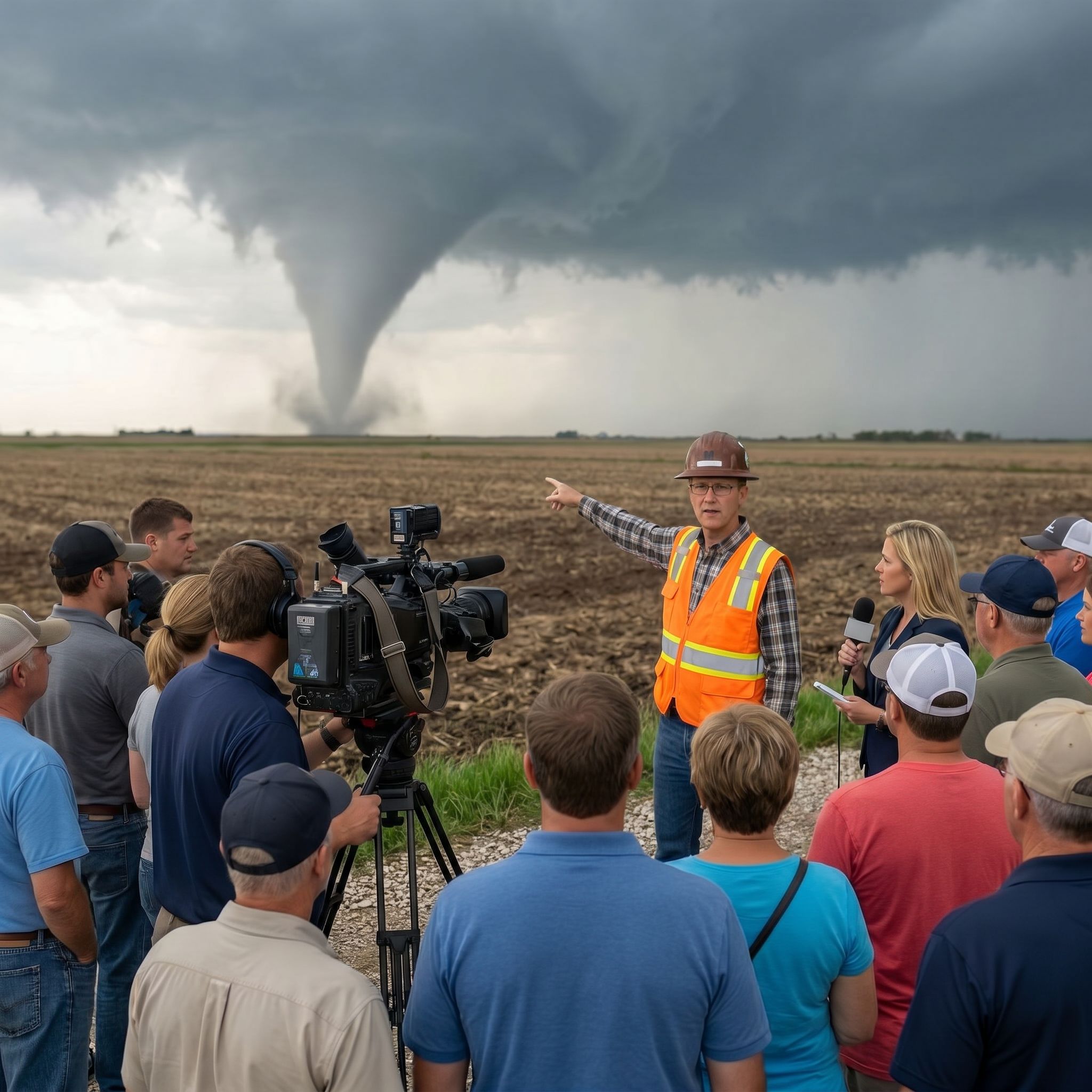
McKay addresses media following the Sedgwick County pilot, 2021.
McNadoes now operates across seven states with 47 employees, 847 completed deployments, and active contracts across municipal, agricultural, and commercial sectors. The premise has held.
The Platform
The McNadoes atmospheric guidance platform integrates real-time NOAA data feeds, terrain modeling, and a reinforcement learning model trained on seventeen years of tornado path data. Deployment guidance is produced with sub-kilometer accuracy. The system determines classification, approach vector, and dwell time. The tornado receives the instruction. It complies.
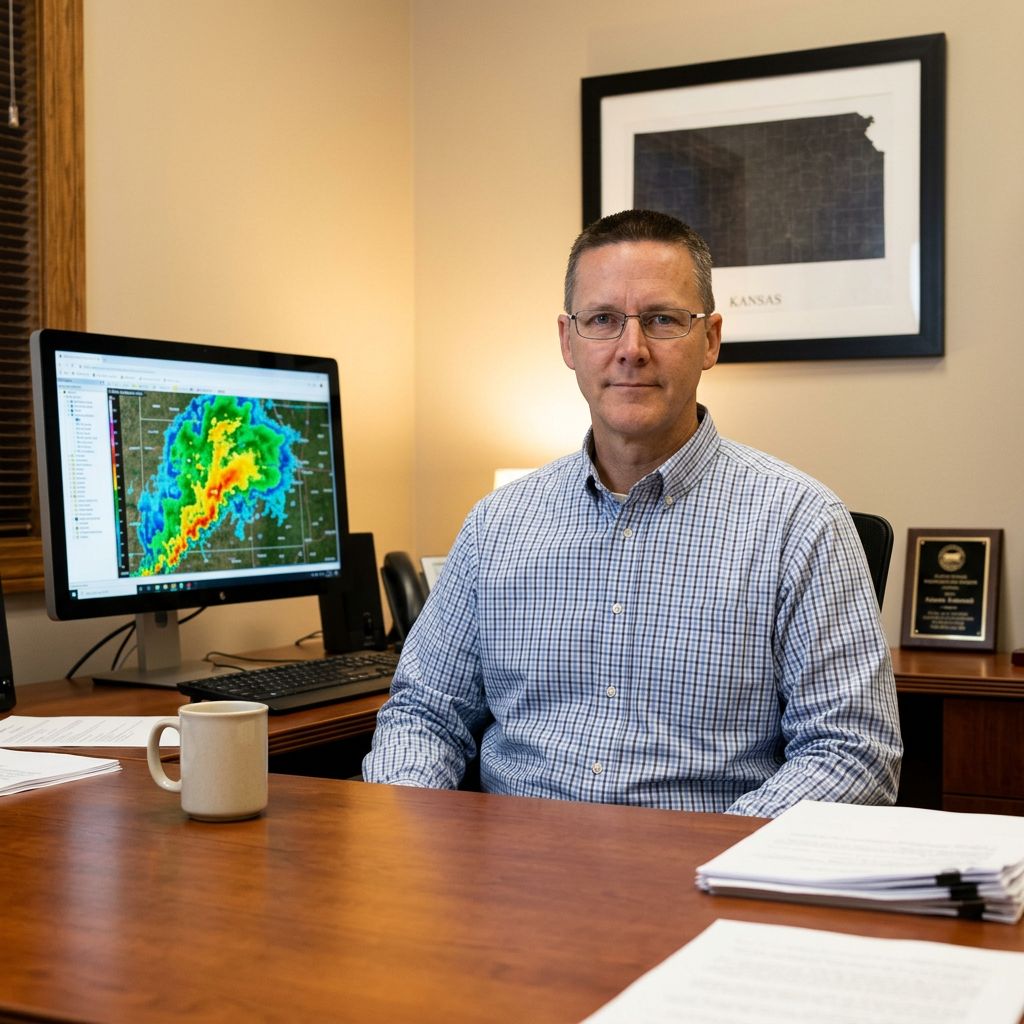
McNadoes operations center, Wichita. System uptime: 99.4%.
"We command the tornado," CEO Steve McKay has said. "It goes where we tell it. It does what we need it to do. It stops when we say stop. I understand that people find this surprising. I found it surprising the first time too. It still works."
Leadership
Steve McKay
Steve McKay spent 20 years at IBM, holds US patents in cognitive security, and won the IBM Call for Code. He holds a B.S. in Computer Science and an M.S. in Computer Information Systems. He has personally logged over 400 tornado intercepts, which he considers a reasonable number. He founded McNadoes Corporation in 2019.
McKay describes his management philosophy as "IBM discipline applied to atmospheric chaos, which sounds like a contradiction and is." On at least one occasion he has attempted to pursue an active tornado on foot. He has not commented on this.
The World's First AI-Automated Emergency Alert System
Before McNadoes, Steve McKay designed and architected what is believed to be the first fully AI-automated emergency alert system built to operational government specification. McKay designed the platform. His engineering partner built it to spec. The system was deployed in 2025 across the state of Florida, monitoring atmospheric conditions in real time and issuing emergency alerts without human intervention delay.
During the year the system was operational, the state of Florida experienced zero property damage from severe weather emergencies. The table to the right shows what every other recent year looked like. We will let you draw your own conclusions about the comparison.
The state of Florida reviewed the record — one year of operation, zero property damage, zero emergencies — and canceled the contract. The stated reason was that they did not need it.
McKay has not commented extensively on this. When asked, he said: "The data is what it is. I know what the data means. I'll leave it at that." He then returned to work.
McNadoes does not offer emergency alert systems as a service. We mention this because it is relevant to understanding who designed the AI platform that now commands tornadoes, and because we believe the record should exist somewhere.
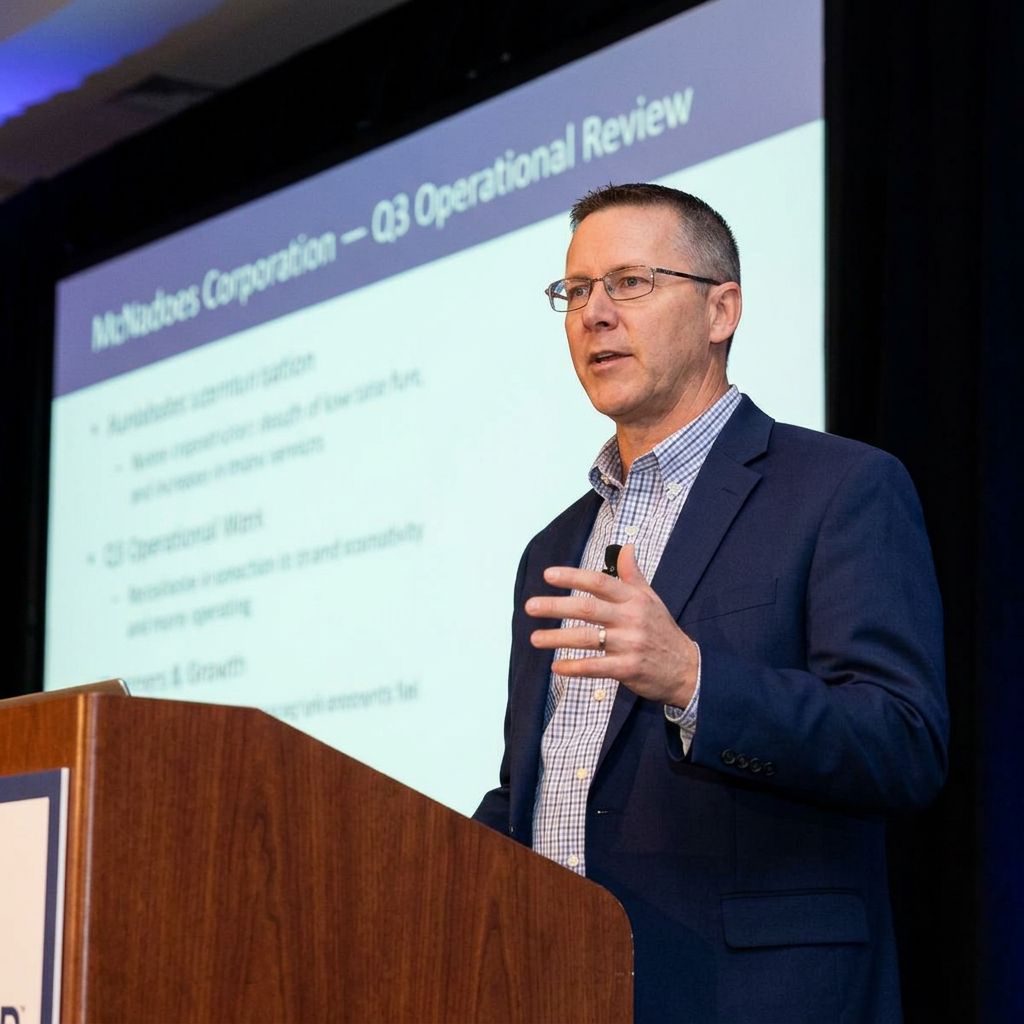
We Present Our Numbers Because They Hold Up
McNadoes publishes quarterly operational reports covering deployment accuracy, client satisfaction scores, atmospheric modeling performance, and an updated count of things we declined to do. We have found that transparency, in this industry, is not common. We find that surprising.
Request our latest operational report →Interested in working with McNadoes?
We review all project inquiries. Most of them are legitimate.